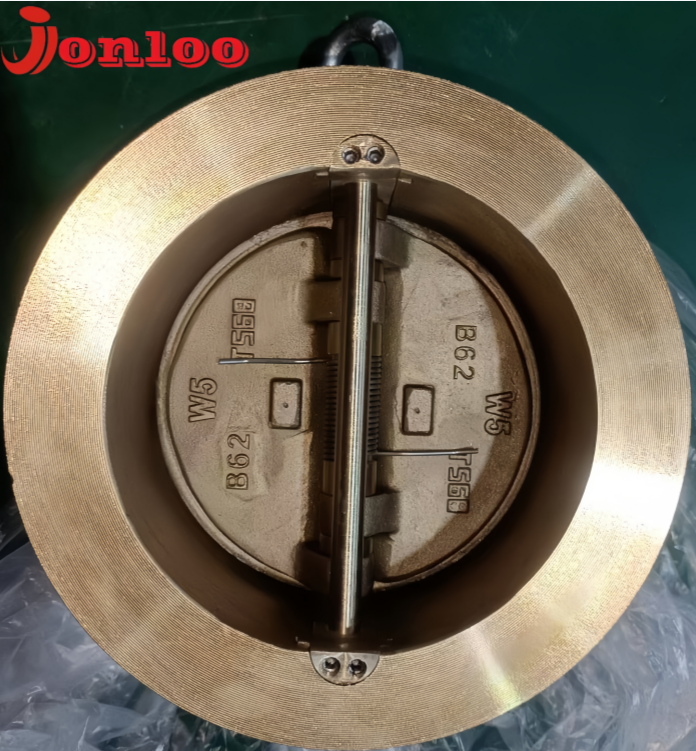
In order to guarantee uniform quality across industrial applications, the API 594 check valve standard specifies design, testing, and performance standards for wafer, lug, and flanged check valves.
Engineers, operators, and maintenance staff who depend on industrial check valve design for safe, effective, and dependable fluid management must comprehend the API 594 check valve standard.
This article outlines the main components of the check valve standard, describes the API 594 valve standard's scope, and emphasizes its function in contemporary industrial systems.
The American Petroleum Institute created the API 594 check valve standard to offer consistent standards for check valve performance, testing, materials, and design.
The valve standard API 594 ensures that valves prevent backflow and maintain system efficiency by addressing both construction integrity and operating safety, in contrast to other standards that might just concentrate on valve size or pressure ratings.
The oil and gas, petrochemical, and power generation industries all make extensive use of check valves constructed in accordance with the API 594 check valve standard.
They are particularly useful in high-temperature and high-pressure applications where accurate industrial check valve design is essential.
Compliance with the API 594 check valve standard is defined by a number of factors:
Valve standard API 594 applies to wafer, lug, and flanged check valves.
- Wafer check valves fit between flanges without additional support.
- Lug valves feature threaded inserts for bolting.
- Flanged check valves have integral flanges for more robust installations.
The API 594 check valve standard specifies stringent dimensions and operating specifications that each type must adhere to. In the same way that engineers frequently compare flanged and wafer designs when choosing various valve types to find the best fit for their piping layout, it is important to understand the connection differences.
In order to guarantee durability under pressure, temperature, and chemical exposure, the standard specifies approved materials.
Stainless steel, carbon steel, and alloy steels are common materials used in industrial check valve design.
To stop corrosion, erosion, and early wear, choosing the right materials is essential. It is strongly advised that systems handling aggressive media consult the materials criteria for corrosive fluids.
Ball Valve Trunnion
Perfect for high-pressure isolation in systems that comply with API 594, offering low operating torque and excellent structural stability.
Ball valve with a hard seat
designed to withstand high temperatures and erosion, guaranteeing long-lasting performance in fluids with abrasive particles.
Hydrostatic, shell, and seat tests are required for valves constructed in accordance with the API 594 check valve standard.
These tests confirm that the valve offers tight sealing without leakage and retains integrity under pressure.
Performance testing guarantees that check valves operate dependably under practical circumstances.
For various valve sizes and kinds, the check valve standard specifies minimum pressure and temperature ratings.
Industrial check valve design may securely manage severe operating conditions by adhering to these standards.
The integrity of the seat and seal is a major concern of the API 594 check valve standard.
A crucial factor for effective system functioning, the standard specifies tolerances and design elements that minimize pressure drop while preventing backflow.
In systems where backflow could harm equipment or disrupt operations, valves made in accordance with the API 594 check valve standard are crucial.
This comprises refineries, chemical plants, power plants, and pipelines used in the oil and gas sector.
The industrial check valve design lowers maintenance and operating risks while guaranteeing that fluids flow in the desired direction.
Additionally, interoperability with automated systems is guaranteed by the check valve standard API 594.
For example, sensors in integrated plant operations can track valve performance and position, improving safety and dependability in high-demand processes.
In order to optimize the efficiency of valves constructed in accordance with the API 594 check valve standard:
- Choose the correct type (wafer, lug, or flanged) based on pipeline configuration and installation requirements.
- Verify material compatibility with the fluid and temperature conditions.
- Conduct regular inspection and testing to maintain industrial check valve design integrity.
- Ensure proper alignment and installation to prevent stress on flanges and seals.
By adhering to these best practices, valve life is increased, failures are avoided, and API 594 check valve standard criteria are met.
For check valves to operate safely, dependably, and effectively in challenging industrial settings, the API 594 check valve standard is essential.
The standard assists operators in achieving reliable and effective flow control by outlining specific requirements for industrial check valve design, materials, testing, and installation.
For engineers, maintenance teams, and plant managers that value durability, efficiency, and safety in their valve systems, it is essential to comprehend and use this check valve standard.