Being a top producer of superior valves, JONLOO frequently gets inquiries concerning the distinctions between different kinds of valves. What distinguishes a butterfly valve from a butterfly check valve is a frequently asked question. Despite having similar names and using a disc-type design, they differ greatly in terms of their operations, applications, and functions.
Using JONLOO's experience, this tutorial explores these important distinctions. The fundamentals, including definition, design, and operational principles, will be covered. This article will assist you in making an informed choice whether you work as an engineer, procurement specialist, or industry professional.
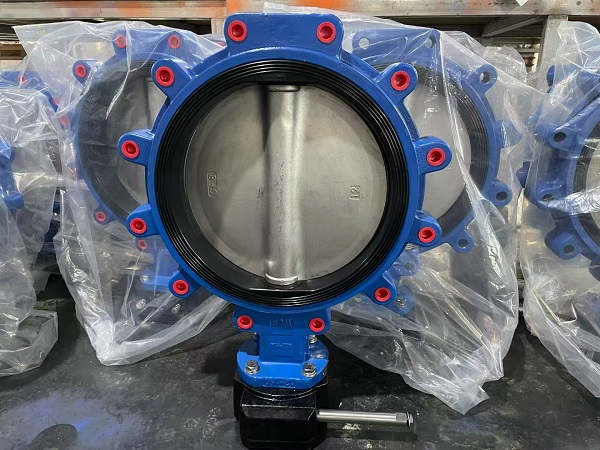
Butterfly valves are quarter-turn rotary valves that are primarily used for flow control or isolation in pipelines. Its disc rotates around a central axis to open or close the flow path.
1.1 How Butterfly Valve Works
By rotating the disc 90 degrees, the valve can be fully open, enabling unhindered flow, or closed, obstructing the flow channel. It is appropriate for controlling flow since partial rotation permits throttling.
1.2 Common Applications
- Water Treatment Plants
- HVAC Systems
- Chemical Processing
- Food and Beverage Industry
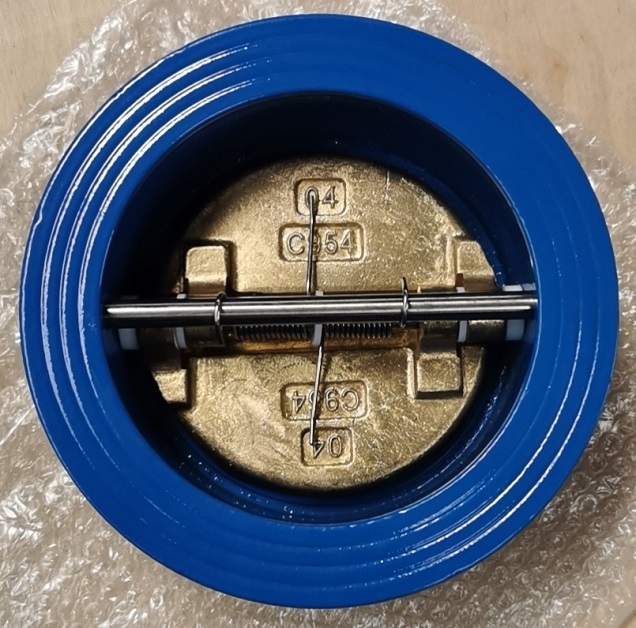
A butterfly check valve, sometimes referred to as a double-disc check valve, is a one-way or non-return valve that stops pipeline backflow. It functions automatically without external actuation, in contrast to butterfly valves.
2.1 Working Principle
The disc is forced open by forward flow, which overcomes spring tension. The spring swiftly shuts the disk to provide a tight seal to stop backflow when flow stops or reverses. Human intervention is not necessary for this automated process.
2.2 Common Applications
- Pump Discharge Lines
- Compressor Systems
- Marine and Offshore Platforms
- Wastewater Management
3. Important Distinctions Between Butterfly Check Valves and Butterfly Valves
Although they both make use of a disc mechanism, their primary uses are different. Here is a comparison of them side by side:
Aspect | Butterfly Valve | Butterfly Check Valve |
| Primary Function | Flow regulation and isolation | Backflow prevention |
| Operation | Manual or actuated rotation | Automatic (spring-loaded) |
| Disc Design | Single disc on shaft | Dual plates with hinges and springs |
| Flow Direction | Bidirectional (with proper sealing) | Unidirectional only |
| Installation | Wafer, lug, or flanged | Wafer, lug, or flanged |
The reasons for selecting one over the other are shown in this table: check valves for protection, butterfly valves for control.
Water hammer usually happens when fluid flow is abruptly interrupted, like when a pump is abruptly stopped or a valve is quickly closed. As a result, kinetic energy is transformed into a pressure wave that travels through the pipe. This shock may result in valve damage, flange loosening, or pipe bursting. Because of their different designs and modes of operation, butterfly valves and butterfly check valves have different capacities to withstand water hammer.
3.1 Butterfly Valves and Water Hammer
The type of operation (manual, pneumatic, or electric) determines how quickly a butterfly valve closes. Water hammer can result from rapid shutting, particularly in systems with high pressures or flow rates. Pump systems need to pay particular attention to this.
The purpose of butterfly valves is not to stop backflow. Water hammer may worsen if there is a chance of backflow in the system.
3.2 Butterfly Check Valves and Water Hammer
Double-disc check valves, also known as butterfly check valves, use spring-loaded double discs to automatically close in order to stop backflow. In order to prevent backflow harm to the system, they are made to react swiftly to changes in flow direction and guarantee immediate closure when fluid stops or reverses. However, water hammer may result from this quick closure.
How can I quickly distinguish between a butterfly valve and a check valve?
Butterfly valves have actuators, while check valves do not.
Can a butterfly valve be used as a check valve?
No, because it lacks an automatic closing mechanism. The reverse is also true.
What maintenance do these valves require?
Check valves need spring inspections every six to twelve months, while butterfly valves need seat inspections on a regular basis.