When it comes to industrial flow control, metal seated trunnion ball valves are the unsung heroes for harsh, high-pressure, and abrasive jobs—think mining operations moving heavy slurry, oil & gas pipelines carrying crude or refined products, and chemical processing plants handling corrosive mixtures. The metal seat design is intentionally built to withstand constant wear, extreme temperature swings, and the impact of abrasive particles, but here’s the kicker: your choice of auxiliary sealing materials is what truly makes or breaks the valve’s performance, overall lifespan, and long-term operational efficiency. Today, we’re breaking down the key differences between three of the top sealing options for these workhorse valves—PEEK, Viton, and FFKM—so plant operators, maintenance teams, and engineers can pick the perfect fit for their specific application needs, with zero guesswork required.
These valves are engineered from the ground up to tough it out in the harshest industrial conditions, with a trunnion-mounted ball that significantly cuts down on friction, keeps alignment on point even during high-pressure surges, and maintains a reliable seal no matter the operating load. But let’s not sleep on the secondary seals—used in stem packing, seat gaskets, or backup sealing systems—because they’re the unsung heroes of leak prevention and internal component protection. PEEK, Viton, and FFKM each have their own unique superpowers, tailored to different operating environments, chemical exposures, and temperature ranges. Knowing their specific strengths (and occasional limitations) is the key to optimizing valve performance, reducing costly unplanned downtime, and getting the most value out of your flow control equipment.
PEEK (short for Polyether Ether Ketone) is a high-performance thermoplastic that’s basically built for the toughest industrial spots—thanks to its next-level thermal stability, exceptional chemical resistance, and impressive mechanical strength that outperforms most standard polymers. With a continuous operating temperature range of -50°C to 260°C (-58°F to 500°F), it absolutely crushes applications where heat is non-negotiable: think high-pressure steam systems in power plants, chemical reactors handling exothermic reactions, and oil refining processes where temperatures regularly spike. What’s more, PEEK can handle short-term temperature spikes well above its continuous range, making it a reliable choice for environments with occasional thermal fluctuations.
What truly sets PEEK apart from other sealing materials? It stands up to a huge range of harsh chemicals—including strong acids, caustic bases, industrial solvents, and even heavy hydrocarbons—so it stays reliable in corrosive environments for years, without degradation or failure. Plus, it’s tough as nails (boasting superior wear resistance) and has low friction properties, which means less wear and tear on the valve stem and packing over time, and a significantly longer overall lifespan for the entire valve assembly. It’s stiffer than elastomers like Viton, but that stiffness is actually a major win for high-pressure jobs—PEEK can handle pressures up to 10,000 psi without warping or losing its seal, making it the go-to for high-pressure industrial pipelines and heavy-duty flow control applications.
Key Applications for PEEK Seals: Oil & gas upstream and downstream operations (including wellhead and refinery applications), chemical processing plants handling corrosive materials, high-pressure steam systems in power generation, and industrial pipelines carrying abrasive or high-temperature fluids. It’s also a top choice for applications where cleanliness is critical, as PEEK is non-toxic and resistant to contamination.
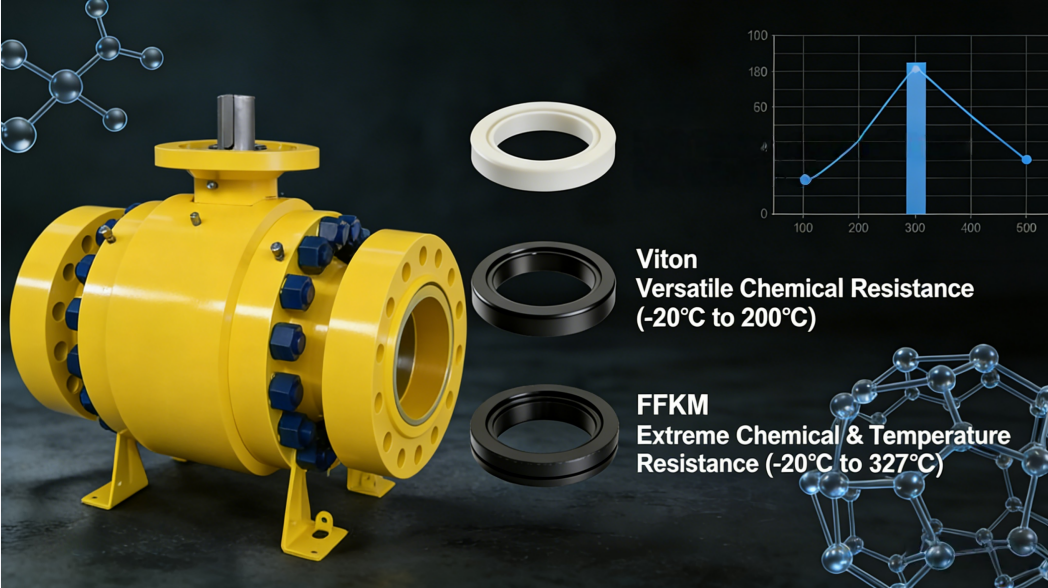
Viton, a family of fluorocarbon elastomers developed specifically for industrial sealing, is one of the most popular sealing picks for metal seated trunnion ball valves—and for good reason: it balances performance, versatility, and cost-effectiveness like a pro. With a continuous operating temperature range of -20°C to 200°C (-4°F to 392°F), it’s perfect for most moderate-temperature industrial jobs, making it the go-to choice for general flow control needs where extreme heat or cold isn’t a concern. Viton is available in several formulations, each tailored to specific chemical exposures, which adds to its versatility across different industries.
Viton holds its own against a wide range of common industrial substances—including hydrocarbons, petroleum oils, fuels, and many mild to moderate industrial chemicals—making it ideal for oil & gas midstream operations, automotive manufacturing, and chemical processing plants with less aggressive chemical environments. Its elastomeric design means great flexibility and superior sealing power, so it stays tight even if there’s minor valve misalignment, pressure dips, or slight wear on the valve seats. It’s not as heat-resistant as PEEK or FFKM, and it can’t handle the most aggressive chemicals (like strong acids or fluorinated compounds), but if you’re not dealing with extreme temps or super aggressive chemicals, Viton is the budget-friendly, reliable choice that gets the job done without breaking the bank.
Key Applications for Viton Seals: General industrial flow control systems, oil & gas midstream pipelines (carrying crude oil or natural gas), automotive manufacturing (including engine and fuel system components), and chemical processing with moderate temperatures and non-aggressive chemical exposure. It’s also commonly used in water treatment plants and general industrial machinery where cost and versatility are top priorities.
FFKM (short for Perfluoroelastomer) is the premium, top-of-the-line pick for when only the best will do—think the most extreme industrial environments where valve failure could lead to costly downtime, safety hazards, or product contamination. Boasting a continuous operating temperature range of -20°C to 327°C (-4°F to 621°F), it outperforms both PEEK and Viton in high-heat jobs by a wide margin, making it a must-have for aerospace applications, semiconductor manufacturing (where high temperatures and cleanroom conditions are critical), and high-temperature chemical processing plants.
Here’s what makes FFKM truly stand out from the pack: it’s nearly impervious to industrial chemicals—strong acids, caustic bases, harsh solvents, aggressive fluorinated compounds, and even most reactive chemicals, you name it. That’s why it’s the top choice for critical applications where chemical compatibility is non-negotiable: pharmaceutical manufacturing (where product purity is essential), semiconductor wafer processing (where even tiny leaks can ruin expensive wafers), and specialty chemical production (handling highly reactive or toxic materials). It’s also super elastic and maintains a tight seal even under extreme pressure—zero leaks, every time, even in the most demanding conditions. The only catch? FFKM comes with a premium price tag, but it’s more than worth it for mission-critical jobs where valve failure isn't an option and the cost of downtime far outweighs the initial investment.
Key Applications for FFKM Seals: Aerospace (including engine and fuel system components), semiconductor manufacturing (cleanroom environments), pharmaceutical processing (sterile and high-purity applications), specialty chemical production (reactive or toxic materials), and extreme-temperature industrial setups where no other sealing material can withstand the conditions. It’s also used in nuclear power plants and other high-stakes industries where reliability is paramount.
No time to deep-dive into each material’s specs? Here’s a quick, easy-to-reference breakdown of PEEK, Viton, and FFKM’s key properties for metal seated trunnion ball valves—so you can make a fast, informed decision for your application:
Sealing Material | Temp Range | Chemical Resistance | Mechanical Strength | Cost-Effectiveness | Flexibility |
PEEK | -50°C to 260°C (-58°F to 500°F); handles short-term spikes | Wide range (acids, bases, solvents, hydrocarbons); resists corrosion | High—stiff, wear-resistant, handles high pressure (up to 10,000 psi) | Medium—more affordable than FFKM, more costly than Viton | Low—rigid thermoplastic, less flexible than elastomers |
Viton | -20°C to 200°C (-4°F to 392°F); moderate temp tolerance | Moderate (hydrocarbons, oils, fuels); not for aggressive chemicals | Low—elastomeric, less rigid than PEEK/FFKM | High—most budget-friendly option for general applications | Medium—flexible, handles minor misalignment/pressure dips |
FFKM | -20°C to 327°C (-4°F to 621°F); best high-temp performance | Universal (nearly all industrial chemicals); impervious to most harsh substances | Medium—elastic yet durable, handles high pressure reliably | Low—premium price tag, best for mission-critical applications | High—super elastic, maintains seal in extreme conditions |
“The right sealing material can make or break your metal seated trunnion ball valve—and by extension, your entire operation,” says [Insert Expert Name], Senior Valve Engineer at [Insert Company Name]. “Viton’s great for general use cases where you don’t need to handle extreme temps or aggressive chemicals, but PEEK and FFKM are non-negotiable for harsh environments where extreme temperatures, high pressure, or corrosive chemicals are a daily challenge. Plant operators just need to match the seal material to their specific setup—considering temperature, pressure, chemical exposure, and budget—to maximize valve life, cut down on unplanned downtime, and keep operations running smoothly.” As industrial jobs continue to get tougher and more demanding, picking the right seal material isn’t just important—it’s essential. By knowing PEEK, Viton, and FFKM’s unique perks and limitations, engineers and plant operators can choose a valve that’s reliable, cuts maintenance costs, and keeps their teams and facilities safe.
Want more info on metal seated trunnion ball valves or need help picking the right seal material for your specific application? Reach out to JONLOO-our team of valve experts is ready to answer your questions, provide customized recommendations, and help you find the perfect flow control solution. You can also head to www.jonloovalves.com to browse our full line of metal seated trunnion ball valves and access additional resources, including technical datasheets and application guides.
JONLOO is a leading provider of industrial valves and flow control solutions, specializing in high-quality metal seated trunnion ball valves, gate valves, and globe valves for mining, oil & gas, chemical, and industrial applications worldwide. We’re all about innovation and quality—our products are engineered to meet the toughest industry standards, with a focus on durability, reliability, and performance in even the harshest operating environments. Whether you need a standard valve for general use or a custom solution for a mission-critical application, our team is committed to delivering the right product at the right time, backed by exceptional customer support and technical expertise.