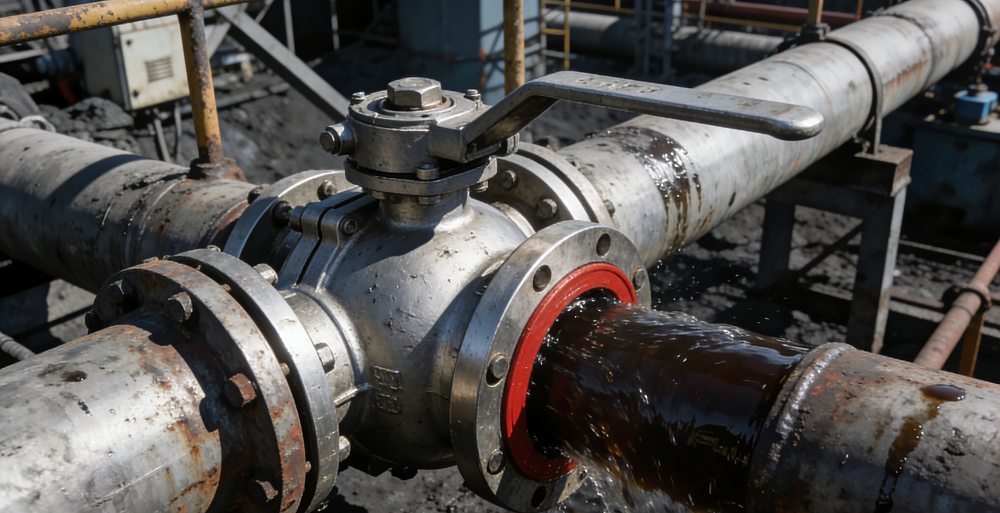
Mining operations worldwide rely heavily on the efficient, consistent movement of slurries—thick, abrasive mixtures consisting of crushed rock, sand, minerals, and chemical additives suspended in water or other carrier fluids. These harsh media are the lifeblood of mineral processing, yet they present a significant challenge to standard industrial equipment, particularly ball valves. Unlike conventional fluids, slurries contain hard, sharp particles that act like industrial-grade sandpaper, gradually eroding valve components and leading to costly downtime, internal leaks, and compromised system safety. For mining facilities striving to maintain uninterrupted production and minimize operational costs, selecting the right valve design tailored to slurry and abrasive service is not just an option—it’s a necessity.
This news article explores the limitations of standard ball valves in slurry applications, highlights the advanced engineering behind specialized valves designed for these harsh environments, and outlines key considerations for mining operators seeking to enhance reliability, reduce maintenance needs, and protect their processing systems. We also showcase how Onero Valve’s industry-leading solutions are transforming slurry handling in mining operations across the globe.
Most standard industrial ball valves are engineered for clean, non-abrasive fluids such as water, oil, or gas—leaving them ill-equipped to handle the rigors of mining slurries. The primary flaw lies in their soft seating materials, typically made from polymers like nylon, PTFE, or polyurethane. While these materials effectively create tight seals in clean applications, they are highly vulnerable to the sharp, hard particles present in slurries.
When a standard soft-seated valve operates, slurry particles often become trapped between the valve’s ball and seat. As the valve closes, these particles are forced into the soft plastic material, creating deep gouges, tears, and uneven wear that quickly damage the seal. Once the seal is compromised, high-pressure fluid begins to leak through the closure—a phenomenon known as “wire drawing”—which further accelerates the erosion of the valve’s metal body and internal components. Additionally, standard valves often experience solid buildup in the cavity surrounding the ball, preventing the valve from achieving a full, tight shut-off and increasing the risk of mechanical jamming.
The valve stem and packing area are also critical points of vulnerability. Slurry particles can migrate into the stem seals, causing increased friction, premature wear, and external leakage. Unlike specialized valves, standard designs lack the protective features needed to keep these contaminants out, resulting in frequent maintenance calls and, in many cases, valve failure within just weeks or months of installation—disrupting production schedules and driving up operational costs.
To address the unique challenges of slurry and abrasive media, mining operators are increasingly turning to metal-seated trunnion ball valves—engineered specifically to withstand the constant physical stress of harsh mining environments. Unlike standard soft-seated valves, these specialized valves feature both a ball and seats constructed from hard metallic alloys, eliminating the vulnerable soft components that slurry particles easily destroy. The metal-to-metal contact between the ball and seats creates a durable, wear-resistant barrier that stands up to even the most abrasive slurries.
The trunnion design is another key advantage: it supports the valve’s ball at both the top and bottom, preventing shifting or misalignment under high system pressure. By keeping the ball perfectly centered, the valve maintains consistent contact with the seats, reducing mechanical stress on the sealing surfaces during operation and ensuring reliable performance over time. This design also minimizes wear on the valve stem and packing, as the centered ball reduces friction and prevents excessive force on these components.
While metal-seated trunnion ball valves are the gold standard for most slurry applications, several other valve types are also used in mining operations, each tailored to specific operational needs:
Knife Gate Valves: These valves feature a sharpened, blade-like disc (or “knife”) that slides down to cut through thick slurries and stop flow. When open, the gate is fully lifted, allowing unobstructed passage of slurry. Knife gate valves are ideal for on/off service but are not suitable for throttling or flow control, as the sharp disc wears quickly when used to regulate flow, leading to leakage.
Pinch Valves: Designed with a flexible rubber sleeve that is compressed (or “pinched”) to shut off flow, pinch valves offer unique protection against abrasion. In mining applications, only the rubber sleeve comes into contact with the slurry, shielding the valve body and internal components from wear. This makes them a cost-effective option for less demanding slurry applications.
Diaphragm Valves: These valves use a flexible diaphragm that is pressed against a seat to close off flow. They are well-suited for corrosive or mildly abrasive slurries and offer reliable throttling and flow control capabilities. The diaphragm acts as a barrier between the slurry and the valve’s internal mechanisms, reducing wear and extending service life.
In addition to these standard specialized valves, many mining operations require custom-engineered solutions to meet unique process requirements—such as high pressure, extreme temperatures, or particularly aggressive slurries. Custom valves can be tailored to specific particle sizes, flow rates, and environmental conditions, ensuring optimal performance in even the most challenging applications.
To survive the harsh conditions of mining slurry service, specialized valves must incorporate two critical design features: scraper seats and hard surface coatings. The goal is straightforward: make the valve’s surfaces harder than the slurry particles themselves to prevent erosion and wear.
Hard coatings are applied to the valve’s ball and seats using advanced techniques such as High Velocity Oxy-Fuel (HVOF) spraying. Common coatings include Tungsten Carbide (WC-Co) and Chrome Carbide, which achieve surface hardness levels exceeding 70 HRC (HV 1100-1300). This extreme hardness resists both impact damage from large rock particles and micro-erosion from fine sand, significantly extending the valve’s service life.
Scraper seats are another essential feature, designed to prevent solid buildup on the valve’s ball. These seats feature a sharp leading edge that wipes away scale, dried slurry, and debris from the ball’s surface during every rotation—ensuring consistent sealing and preventing jamming. Many advanced designs also include secondary seals or O-ring barriers to protect the seat springs, preventing solids from clogging the springs and ensuring consistent “energized” sealing even in harsh conditions.
Key Design Feature | Engineering Solution | Performance Benefit |
Scraper Seats | Sharp leading-edge seat design with precision machining | Wipes away scale, dried slurry, and debris from the ball surface during every rotation, preventing buildup and ensuring reliable shut-off. |
Spring Protection | Secondary seals or O-ring barriers around seat springs | Prevents solids from clogging the seat springs, ensuring consistent energized sealing and reducing maintenance needs. |
Hard Facing | Tungsten Carbide (WC-Co) or Chrome Carbide via HVOF spraying | Achieves surface hardness of 70 HRC (HV 1100-1300), resisting abrasive wear, high-velocity erosion, and impact damage. |
Sealing Integrity | Precision metal-to-metal contact with tight tolerances | Meets Class V or VI leakage rates (per ANSI/FCI 70-2) even in the harshest mining environments, ensuring system safety and efficiency. |
Choosing the right valve for slurry service requires careful consideration of several key factors, as even the most advanced valve will fail if it is not matched to the application. Mining operators should keep the following criteria in mind when selecting a valve:
Slurry Particle Characteristics: The size, hardness, and concentration of particles in the slurry are critical. Larger, harder particles require valves with thicker hard coatings and more robust sealing surfaces, while high-concentration slurries may need specialized scraper seats to prevent buildup.
Temperature and Environment: Both the temperature of the slurry and the surrounding operating environment must be considered. Extreme temperatures can affect the performance of valve materials and coatings, so it is essential to choose a valve rated for the specific temperature range of the application.
System Pressure: The maximum pressure of the mining system must be matched to the valve’s pressure rating. The lowest-rated component in the system determines the overall pressure capacity, so it is crucial to select a valve that can withstand the system’s peak pressure without failure.
Maintenance and Accessibility: Mining operations often occur in remote or hard-to-reach locations, so valves should be easy to maintain, repair, or replace. Look for valves with modular designs that allow for quick component replacement, reducing downtime.
Flow Control Requirements: Determine whether the valve will be used for on/off service or throttling/flow control. Some valve types (like knife gate valves) are not suitable for throttling, while others (like diaphragm valves) excel at it.
JONLOO Valve has established itself as a trusted partner for mining operators worldwide, delivering high-performance industrial valves designed specifically for the harsh conditions of slurry and abrasive service. Unlike standard valves that fail quickly in mining environments, JONLOO’s metal-seated trunnion ball valves are engineered to handle a wide range of media—including water, gas, oil products, natural gas, and corrosive substances like alkalis and acids—making them versatile enough for all mining applications.
At JONLOO Valve, quality and durability are non-negotiable. Every valve undergoes rigorous testing to verify dimensions, surface hardness, and pressure resistance, ensuring it can withstand the demands of real-world mining operations. Our pressure testing protocols for valve bodies and sealing systems simulate the exact operating conditions of mining facilities, confirming reliable sealing performance and pressure resistance even in the most challenging environments.
Slurry and abrasive service in mining operations demands more than standard industrial valves. To avoid leaks, downtime, and costly repairs, operators must invest in specialized valve designs—like metal-seated trunnion ball valves—that incorporate hard coatings, scraper seats, and robust construction. These features provide the hardness, structural strength, and reliability needed to withstand the constant abuse of slurry media, protecting production timelines and ensuring system safety.
JONLOO Valve is committed to delivering innovative, high-quality valve solutions for mining operations. With a focus on durability, performance, and customer satisfaction, JONLOO Valve is the ideal partner for mining operators looking to optimize their slurry handling systems.