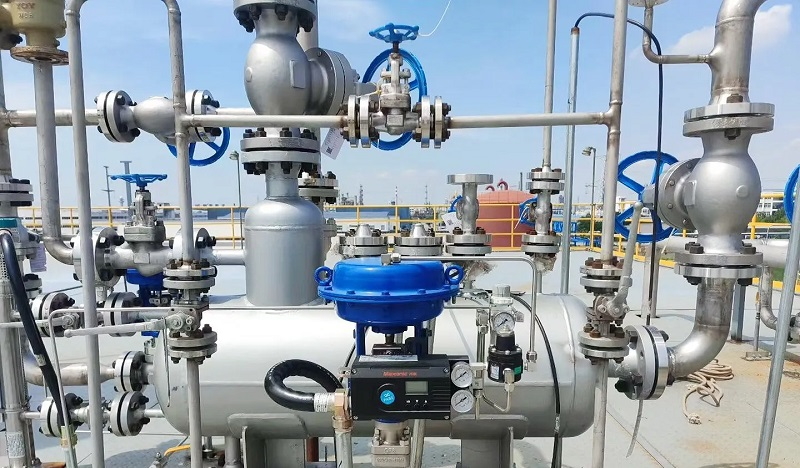
In the complex landscape of modern industrial fluid control, engineers and plant managers are continually challenged to select components that balance reliability, operational efficiency, and long-term cost-effectiveness. Among the various types of isolation and throttling devices available, the diaphragm valve has emerged as a highly dependable solution, particularly for handling challenging, abrasive, or viscous media. Today, we take a comprehensive, neutral look at a specific robust solution designed for heavy-duty pipeline systems: the Weir type diaphragm valve, engineered specifically with CC50 material and configured for DN200 PN10 applications. As visually confirmed by recent production units, the valve features a robust manual handwheel, a heavy-duty cast body with clear "CC50" and "DN200 10" markings, and a reliable bolted bonnet design. This article explores its design philosophy, material advantages, technical specifications, operational performance, and ideal working conditions.
To fully appreciate the advantages of a Weir type diaphragm valve, one must first understand its internal mechanics. Unlike straight-through designs, which feature an unobstructed linear flow path, the weir type incorporates a raised saddle—or "weir"—in the bottom of the valve body. When the handwheel is turned, the compressor pushes the flexible diaphragm down onto this raised weir, creating a highly effective, bubble-tight seal.
This specific internal geometry creates a distinct flow path. As fluid enters the valve, it flows over the weir and exits the other side. While this design does introduce a slight change in flow direction, it offers significant operational advantages. The primary benefit of the weir design is its exceptional capability for precise throttling and flow regulation. Because the diaphragm only needs to travel a short distance to meet the weir, the mechanical stroke is minimized. This shorter stroke means less wear on the diaphragm, extending its operational lifespan, and allows for highly accurate, incremental adjustments to the flow rate.
Furthermore, the weir design is inherently better at handling high-pressure differentials. When the valve is closed, the pressure of the fluid pushes the diaphragm firmly against the weir, reinforcing the seal rather than fighting against it. This makes the Weir type diaphragm valve a reliable choice for critical shut-off applications in moderate to high-pressure systems.
The structural integrity, safety, and lifespan of any industrial valve are dictated by the materials used in its construction. This specific Weir type diaphragm valve is manufactured using CC50 material, as clearly cast onto the side of the valve body in the provided imagery. CC50 is an industrial designation typically referring to a high-quality cast steel or a specialized alloy equivalent (often aligning with international standards such as ASTM A216 WCB or similar national grades).
When specifying a valve for heavy-duty applications, choosing CC50 material over standard cast iron offers a multitude of mechanical and chemical advantages.
Mechanical Strength and Durability: CC50 offers superior tensile strength and yield strength. In a DN200 PN10 application, the valve body must withstand significant mechanical stresses from the weight of the pipeline itself, as well as the dynamic forces of the fluid passing through it. The robust nature of CC50 ensures the valve maintains its structural integrity even under severe water hammer conditions or unexpected pressure spikes, far exceeding the capabilities of standard grey iron. The visual evidence of the thick, cast flanges and the heavy bolted bonnet further attests to its ability to handle high mechanical loads.
Corrosion and Erosion Resistance: While not a stainless steel, CC50 cast steel provides a reliable level of corrosion resistance against a wide range of non-aggressive to mildly corrosive fluids, such as industrial water, seawater, and various chemical solutions. Furthermore, its hardened surface provides better resistance to erosion when handling mild slurries or particulate-laden media compared to softer metals.
Temperature Tolerance: CC50 material performs exceptionally well across a broad temperature spectrum, making it suitable for both ambient temperature water treatment lines and moderately elevated temperature chemical processing environments, provided the internal diaphragm elastomer is matched appropriately to the specific temperature requirements.
Understanding the nomenclature is critical for proper system integration and safety. The specification DN200 PN10 provides the core dimensional and pressure parameters of the valve.
DN200 (Nominal Diameter): DN stands for "Diamètre Nominal" (Nominal Diameter). A DN200 valve features a nominal bore of 200 millimeters, which is approximately equivalent to 8 inches in imperial measurements. This large bore size is specifically engineered for high-volume flow applications. Pipelines utilizing DN200 valves are typically main headers or primary distribution lines in water treatment plants, large chemical processing facilities, or mining operations. The large size allows for massive throughput with minimal fluid velocity, reducing the risk of erosion in the pipeline.
PN10 (Nominal Pressure): PN stands for "Pressure Nominal." A PN10 rating means the valve is designed to operate at a maximum allowable working pressure of 10 bar (approximately 145 psi) at reference temperatures (usually 20°C). When combined with the structural integrity of CC50 material, a PN10 rating ensures the valve has a substantial safety margin for standard industrial pumping systems. It is crucial to note that the flanges of a DN200 PN10 valve are drilled according to specific international standards (such as DIN 2501, EN 1092-1, or ISO 7005-2), ensuring broad compatibility with standard piping systems globally. The presence of clear "10" and "DN200" markings on the casting ensures easy identification and verification on site.
The combination of a weir design, CC50 material, and a robust manual handwheel operator results in a valve with exceptional performance characteristics.
Superior Sealing and Zero Leakage: The fundamental principle of a diaphragm valve is that the flexible diaphragm acts as the only moving part in contact with the media. It is clamped between the valve body and the bonnet, completely isolating the upper valve mechanism (the stem, the compressor, and the handwheel) from the fluid. This design guarantees zero leakage to the atmosphere, a critical safety feature when handling toxic, volatile, or hazardous chemicals. It also prevents the fluid from corroding the stem threads, ensuring smooth operation over thousands of cycles.
Precise Throttling and Flow Control: The interaction between the compressor and the raised weir allows for exceptional control over flow rates. The handwheel provides the mechanical advantage needed to carefully compress the diaphragm, making the weir type valve ideal for applications where precise dosing or gradual flow adjustment is required.
Low Maintenance and Cost Efficiency: Valves with complex internal mechanisms (like ball valves or gate valves) often require extensive dismantling for repairs. In contrast, maintaining a diaphragm valve is highly cost-effective. The only wearable part is the diaphragm itself. When maintenance is required, the bonnet bolts (clearly visible in the design) are simply removed, the old diaphragm is replaced, and the valve is reassembled. This can often be done in-line without removing the valve body from the pipeline, drastically reducing downtime and labor costs.
Contamination Prevention and Hygiene: Because the media is entirely contained by the body and the diaphragm, and there are no dead spaces or metal-to-metal sliding parts in the flow path, the weir type valve is an excellent choice for sanitary applications, pharmaceutical manufacturing, and food and beverage processing, where bacterial growth and cross-contamination must be strictly avoided.
Due to its specific combination of size, pressure rating, material, and internal design, this Weir type diaphragm valve is well-suited for a diverse array of industrial environments:
Water and Wastewater Treatment: This is a primary application for DN200 valves. They are ideal for handling raw water, sludge, chemical dosing lines (such as ferric chloride or sodium hypochlorite), and filtration systems. The weir design provides excellent control for chemical dosing.
Chemical Processing: The CC50 body, paired with an appropriate elastomer or PTFE diaphragm, handles a wide variety of acids, bases, and solvents. The hermetic sealing prevents dangerous chemical leaks.
Pharmaceutical and Food Processing: Where the unobstructed flow path allows for complete drainage and clean-in-place (CIP) / sterilize-in-place (SIP) protocols. The precise control is essential for ingredient batching.
Power Generation: Used in cooling water systems, ash handling, and flue gas desulfurization (FGD) scrubber lines, where reliability and tight shut-off are paramount.
Mining and Metallurgy: While heavily abrasive slurries might require a straight-through design, the weir type is often used in milder slurry applications, tailings lines, and reagent dosing where precise control is more critical than minimizing pressure drop.
To maximize the lifespan of a DN200 PN10 diaphragm valve, proper installation and maintenance protocols should be followed. While diaphragm valves can generally be installed in any orientation, it is recommended for most applications to install them with the stem vertical and the handwheel pointing upwards. This ensures that gravity assists in keeping the diaphragm clean and prevents solids from settling on top of the diaphragm.
During operation, operators should avoid using excessive force on the handwheel to close the valve. The diaphragm is designed to seal against the weir with moderate torque; over-tightening can cause the diaphragm to pinch or extrude, drastically reducing its operational life. Regular inspection of the diaphragm is recommended based on the severity of the application. If the media is highly abrasive or chemically aggressive, the diaphragm should be checked more frequently. Always ensure that replacement diaphragms match the original specifications for material compatibility and temperature ratings.
Q: Why choose a Weir type over a straight-through type diaphragm valve?
A: The Weir type diaphragm valve is preferred for applications requiring precise throttling, frequent cycling, and high-pressure differentials. The straight-through type is better suited for highly viscous fluids or heavy slurries where minimal pressure drop is the absolute priority.
Q: Can this DN200 PN10 valve be automated?
A: Yes. While the model described features a manual handwheel, the top mounting flange of standard diaphragm valves is designed to accept pneumatic or electric actuators, allowing for remote operation and integration into automated process control systems.
Q: What determines the pressure rating of the valve?
A: The PN10 rating is determined by the wall thickness of the CC50 cast steel body and the strength of the flange connection. It is designed to safely withstand a continuous working pressure of 10 bar.
The Weir type diaphragm valve in CC50 material with a DN200 PN10 specification represents a highly reliable, low-maintenance, and efficient solution for large-scale fluid handling. By combining the superior flow control characteristics of the weir design with the mechanical strength of CC50 cast steel and the hermetic sealing of diaphragm technology, this valve provides engineers and plant managers with a robust asset capable of enduring demanding industrial working conditions. Whether managing municipal water supplies, precise chemical dosing, or pharmaceutical processing, this valve delivers consistent, leak-proof performance that enhances overall operational safety and efficiency.