The FT14 is a very popular "ball float" steam trap, most famously manufactured by Spirax Sarco. It's a mechanical device designed to remove condensate (water) from a steam system without letting live steam escape.
Recently, the FT14 series steam trap has continuously become the core choice for the optimization and upgrading of industrial steam systems due to its excellent performance and wide industry adaptability. As a highly popular "ball float" steam trap, it is most famously manufactured by Spirax Sarco, though many other manufacturers also produce versions of this trap (often with model numbers like FT14H), making its design synonymous with Spirax Sarco's original product.
Essentially, the FT14 is a mechanical device specifically designed to remove condensate (water) from a steam system without letting live steam escape—this is the key to its widespread recognition and application in industrial settings. It has been widely applied in many key fields such as pharmaceuticals, chemicals, and food processing, providing strong support for enterprises to reduce operation and maintenance costs and improve production efficiency.
Here are the key details you need to know:
How it Works: It uses a closed ball float that rises and falls with the condensate level. As the float rises, it opens a valve to discharge the water. Because the valve is always below the water level, it creates a "water seal" that prevents steam from escaping.
Key Features: It comes with an integral automatic air vent to remove air during startup (preventing "air binding") and allows for continuous drainage of condensate as soon as it forms.
Typical Uses: It is ideal for applications requiring efficient heat transfer, such as heat exchangers, unit heaters, drying cylinders, and separator drainage.
Materials & Specs: The body is typically SG iron (ductile cast iron) with stainless steel internals for durability. It is available in sizes from 1/2" to 2" with screwed connections.
Other manufacturers also produce versions of this trap (often with model numbers like FT14H), but the design is synonymous with Spirax Sarco's original product.
Would you like to know how to select the right size or compare it to other types of steam traps like thermodynamic or thermostatic models?
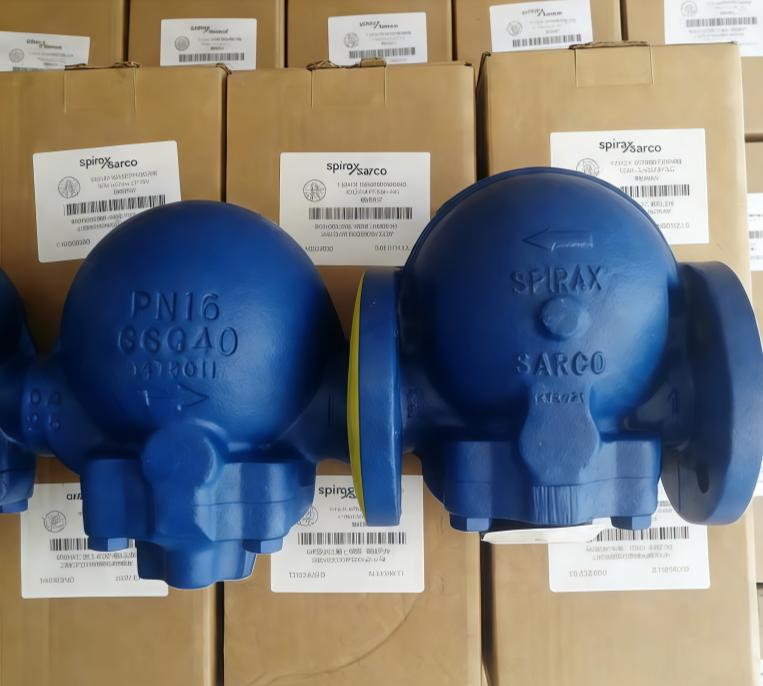
Let's compare the FT14 ball float trap with two other common types: the thermodynamic and the thermostatic trap. The right choice depends entirely on your specific application.
Here is a quick comparison:
| Feature | FT14 (Ball Float) | Thermodynamic (e.g., TD series) | Thermostatic (e.g., BPT series) |
|---|---|---|---|
| Operating Principle | Mechanical float rises/falls with condensate level | Relies on pressure difference of flash steam to open/close a disc | Responds to temperature difference between condensate and steam |
| Discharge Pattern | Continuous | Intermittent (cyclic "blast" discharge) | Intermittent (opens when condensate cools) |
| Key Strength | Best for efficient heat transfer; handles large, fluctuating loads perfectly. | Extremely robust, simple (one moving part), handles superheat & water hammer well | Excellent for venting air during startup; energy-saving (discharges cooler condensate) |
| Key Weakness | Not for superheated steam; can be damaged by water hammer | Can waste steam if oversized or under low pressure; prone to back-pressure issues | Slow response; not for applications needing immediate condensate removal |
| Best Application | Heat exchangers, unit heaters, drying cylinders, any process requiring rapid, continuous heating | Steam mains drainage, tracing lines, outdoor applications (freeze-proof) | Steam tracing, radiators, preheating coils where sub-cooling is acceptable |
Here is a simple decision guide based on your system's needs:
Your priority is maximum heat transfer efficiency. The trap's continuous discharge ensures your equipment is always full of steam and never "waterlogged"
You have a heat exchanger or process with a modulating temperature control valve. Float traps handle the rapid and wide swings in steam pressure and condensate load that these systems create
You have a large volume of condensate that needs to be removed immediately as it forms.
Your system has superheated steam (which would damage the FT14's thermostatic air vent) .
The trap is installed on a high-pressure steam main for draining (drip applications). They are simple, durable, and immune to freezing when installed correctly.
You are concerned about water hammer. Thermodynamic traps are very robust and can withstand the shock.
Your goal is to save energy by using the "sensible heat" of the condensate before it's discharged. These traps allow the condensate to cool below steam temperature before opening.
The application is steam tracing lines (small bore pipes) or radiators, where slow heating and small loads are standard.
Air venting at startup is critical, as they are fully open when cold and will push large volumes of air out of the system quickly.
Once you decide on the FT14, you still need to pick the right variant. The model number typically includes the maximum pressure, e.g., FT14-4.5 (65 psig), FT14-10 (145 psig), or FT14-14 (200 psig) . Sizing is not just about pipe size but about condensate capacity (kg/hr or lbs/hr). This capacity changes based on the differential pressure across the trap. You should always size the trap to handle the worst-case (startup) load with a reasonable safety factor.
I hope this helps you make the right choice for your system. If you describe your specific application and operating pressures, I can help narrow down the recommendation further.